First summary of the Neogene avifauna of Bulgaria
During the last three decades, numerous fossil remains of birds have been discovered and studied in Bulgaria, which reveal a significantly greater diversity of the Neogene avifauna than was previously thought. Among the important discoveries are the first European finds of hornbills, one of the earliest fossil snake-eagles, Neogene pheasants, as well as the first remains of ostriches, peacocks, swans, falcons and larks found in Bulgaria.
The data on these findings have been published in various scientific studies in Bulgaria and abroad, including Austria, the Czech Republic, France, the Netherlands, Poland, Russia, Turkey and the USA. Due to the accumulation of new materials, the discovery of new deposits and the revision of some already known species, a complete update of the information is required. The main goal of this study is to bring together for the first time the available information on all known Neogene localities of birds in Bulgaria, to present the established taxa and to clarify their importance for the restoration of the ancient natural habitats and paleobiogeographic relationships of the Balkans.
So far, 17 sites of Neogene birds have been established in Bulgaria — 12 from the Miocene and 5 from the Pliocene. The preferred habitats of fossil birds are reconstructed based on the ecological features of their closest modern relatives.
A total of 24 bird taxa were identified, including three genera new to science — Euroceros, Balcanas and Eremarida — and 11 new species. The Bulgarian finds represent approximately 0.36% of all known fossil bird species and 0.73%, or about 0.7%, of the known Neogene bird taxa in the world.
The Late Miocene site of Hadzhidimovo is the richest in species, where five taxa have been established. Followed by Hrabarsko, Dorkovo and Muselievo with three taxa each. About a quarter of the birds identified are aquatic or associated with aquatic habitats, including swans, geese, ducks, cormorants, gulls and flamingos. Forest birds, including grouse, peacocks and some birds of prey, make up approximately one-eighth of the taxa recorded.
The greatest diversity of birds is associated with open spaces. Ostriches, ground birds, hornbills, buzzards, falcons, eagles, ptarmigans and larks form a group that represents nearly half of the established Neogene avifauna of Bulgaria. These birds testify to the existence of grassy, relatively dry and open landscapes.
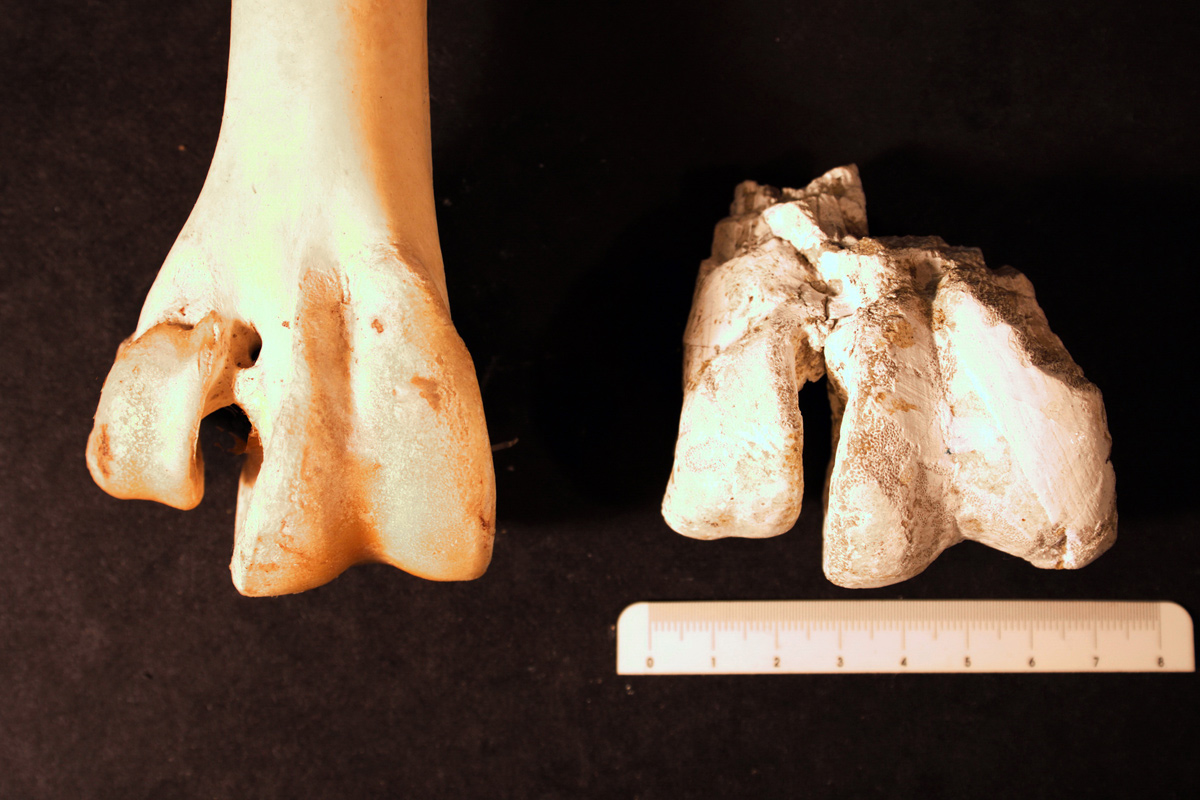
Ostriches are found in four localities — Hadzhidimovo, Kalimantsi, Sarafovo and Stanyantsi. They are associated with the Late Miocene Hipparion fauna and the Irano-Turanian savannah biome. Their skeletal remains have been referred to Struthio karatheodoris (Fig. 1), but eggshell fragments have also been found. The so far known localities of S. karatheodoris delineate the peri-Aegean range of the species.
Particularly significant is the discovery of Euroceros bulgaricus — a new genus and species of ground hornbill of the group Bucorvini. This is the first find of representatives of the Bucerotidae family in Europe. It shows that during the late Miocene these birds had a much wider distribution, covering Africa, Europe and Asia. Today, the family is found in Sub-Saharan Africa and the Indo-Malayan zoogeographic region.
Birds of prey also have important scientific importance. Buteo spassovi is one of the earliest representatives of the genus Buteo in the Western Palearctic, with Neogene finds known from southern Europe. The Rhodope snake eagle (Circaetus rhodopensis) found in late Miocene strata is the earliest known fossil snake eagle in the world. The Bulgarian falcon (Falco bulgaricus) from Hadzhidimovo is also an important species. It supports the conclusion that the split of the genus Falco into the ’tinnunculus’ and ’cherrug’ groups occurred by the late Pliocene at the latest, with the ’tinnunculus’ group being more ancient and diversified by the late Miocene.
Early Pliocene remains of Lagopus grouses are among the oldest known representatives of the genus. Of the Miocene songbirds, two taxa of larks were also established, one of which belongs to the new genus Eremarida, adapted to dry and open habitats.
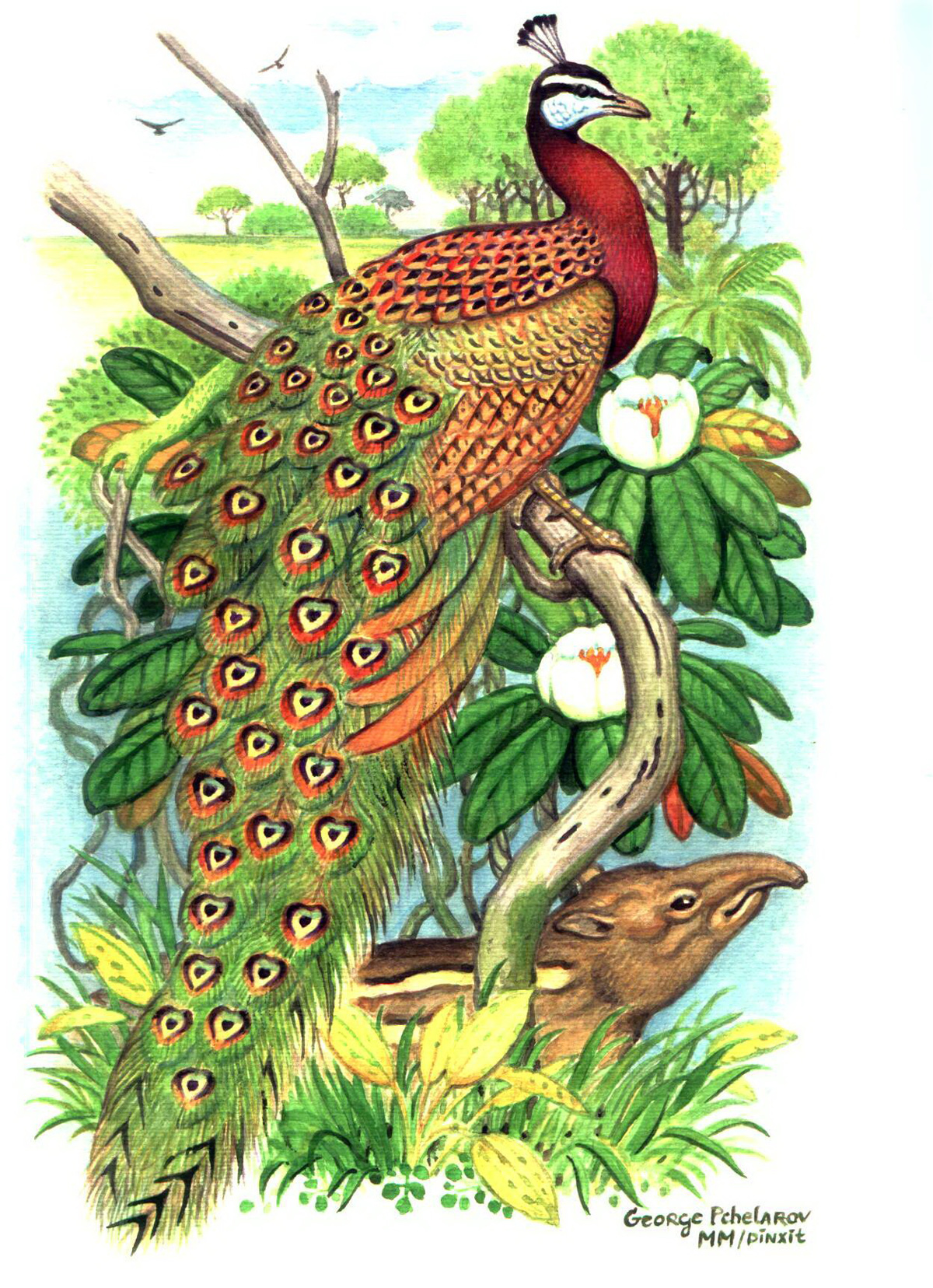
Forest and forest-savanna environments are represented by several important taxa. Tetrao rhodopensis from the Pliocene Dorkovo deposit is the oldest known representative of the genus Tetrao. The late Miocene Bulgarian pheasant (Phasianus bulgaricus) is the earliest known Neogene find of true pheasants in Europe. The Bravard’s peacock (Pavo bravardi; fig. 2) shows that peafowl were more widely distributed in the Balkans during the late Neogene. Today, peafowls inhabit the Afrotropical and Indo-Malayan zoogeographic regions. Together with ostriches and hornbills, they exemplify the once widespread distribution of Afro-Asiatic animal groups whose modern ranges are now divided. Ostriches were found in Asia until the middle of the 20th century, and their disappearance from this continent is a relatively late event of the Holocene.
Among the passerine birds they impressed specimens to the starling family (Sturnidae), with the description of a new genus, Dobrudzha starlings (Dobrosturnus). These finds date back approximately 12.5—10.5 million years and rank among the oldest known bird remains in Bulgaria. At the Satovcha site, feathers — rather than skeletons — were discovered, likely belonging to at least two species. Found alongside them were numerous plant fossils from trees and shrubs, supporting the hypothesis of a forested habitat.
Waterbirds are significant for reconstructing ancient hydrography. The first formally described Neogene birds from Bulgaria are the Serdika cormorant (Phalacrocorax serdicensis) and the Thracian goose (Anser thraceiensis).
The new genus and species of duck, Balcanas pliocaenica, serves as an indicator of the presence of large, slow-flowing freshwater bodies within a wooded savanna environment. The Vera’s swan (Cygnus verae) attests to the existence of a substantial Pliocene lake in the Sofia Basin. Remains of a small duck species from Kremikovtsi are among the earliest Miocene records of the group Anatini in Europe. Furthermore, a nearly complete skeleton of a gull (Larinae gen.) from Hrabarsko indicates that a large inland water body existed in the region during the early Miocene.
The Bulgarian Neogene avifauna is significant not only for the systematics and evolution of birds but also for understanding ancient connections between Europe, Asia, and Africa. Its composition shows the strongest affinities with Western Eurasian faunas, and to a lesser extent with Asian ones. The Balkan Peninsula — particularly its southern regions — as a transitional biogeographic zone, linking various animal groups within the former Irano-Turanian paleobiogeographic realm.
Climatic shifts during the Late Miocene and Pliocene led to increasing aridity and the expansion of open, grassy landscapes, which facilitated the dispersal of birds across different regions. Subsequent climatic changes restricted the ranges of several groups, ultimately shaping their present-day distribution. The presence of ostriches, peafowl, and ground hornbills in Bulgaria indicates that both open savanna-steppe and wooded habitats coexisted here during the Neogene.
In terms of its overall composition, the Bulgarian avifauna aligns with data from neighboring Balkan states — such as Greece and Romania — as well as countries within the Black Sea basin, including Ukraine, Moldova, and Georgia. The most notable discovery is the presence of hornbills in Southern Bulgaria during the Late Miocene. The closest known fossil occurrence of this family, outside of its modern-day range, is in the Atlas Mountains of Morocco. In conclusion, although they represent a small fraction of the global diversity of fossil birds, the Neogene finds from Bulgaria constitute a significant source of information regarding the evolution, dispersal, and ecological history of birds in Southeast Europe. The combination of 17 localities, 24 taxa, three new genera, and 11 new species underscores the importance of Bulgaria and the Balkan Peninsula as a promising, yet still insufficiently explored, region for future paleontological research.
Source: Boev, Z. N. 2026. Connecting Europe and Asia: The Neogene birds of Bulgaria and their paleoenvironmental and paleornithogeographical significance. — Geologica Balcanica 55 (2): 65—75. https://www.geologica-balcanica.eu/sites/default/files/articles/Boev_GEOL_Balc_55-2_2026.pdf