From open data to the footsteps of Braun-Blanquet: NMNHS participation in a European vegetation conference
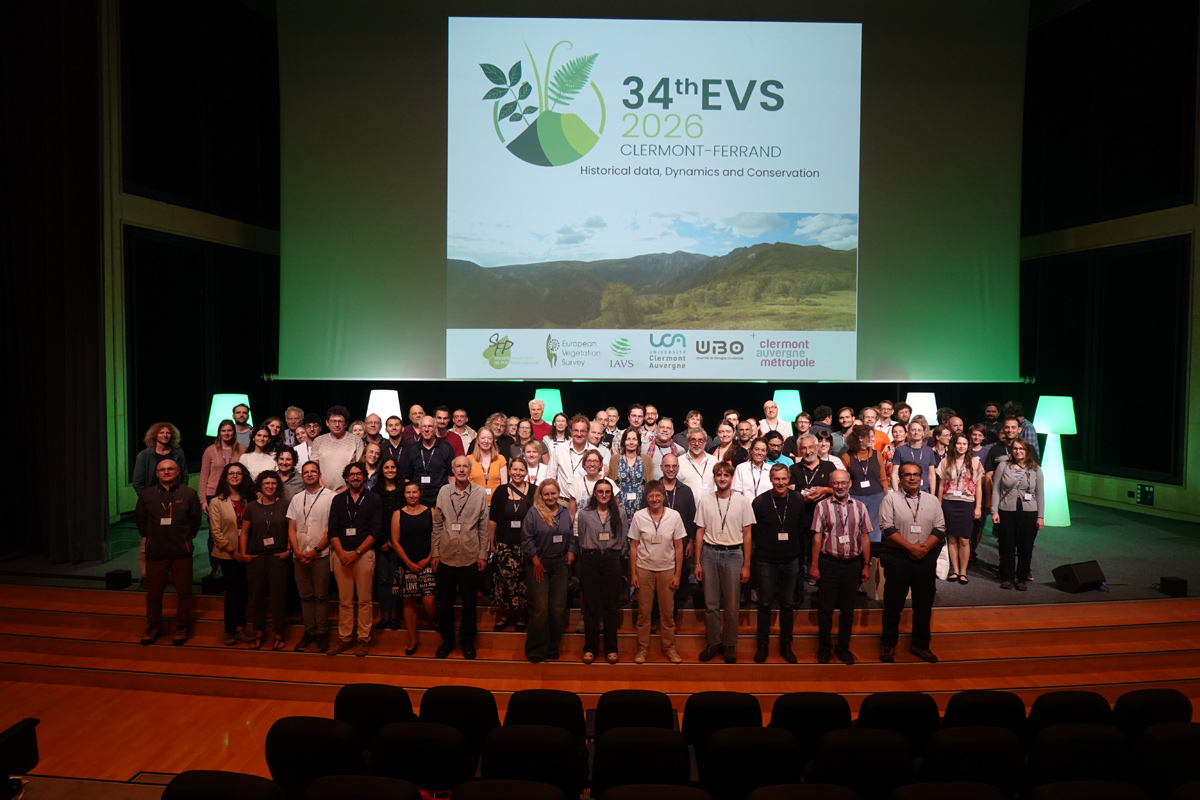
From 7 to 11 September 2026, the 34th European Vegetation Survey (EVS) Conference took place in Clermont-Ferrand, France, with the participation of Sen. Assist. Salza Palpurina, PhD, from the National Museum of Natural History at the Bulgarian Academy of Sciences (NMNHS). The meeting focused on historical data, vegetation dynamics and conservation, and marked the centenary of the phytosociological studies conducted by Josias Braun-Blanquet and Aimé Luquet in Auvergne.
The European Vegetation Survey (EVS) is a working group of the International Association for Vegetation Science (IAVS), bringing together researchers studying plant communities in Europe and beyond. Through international collaboration, data sharing and the development of a common vegetation classification, EVS provides a scientific basis for studying vegetation change and conserving natural habitats. Its work supports the Natura 2000 network, monitoring and ecological restoration by linking scientific research with the practical conservation of biodiversity.
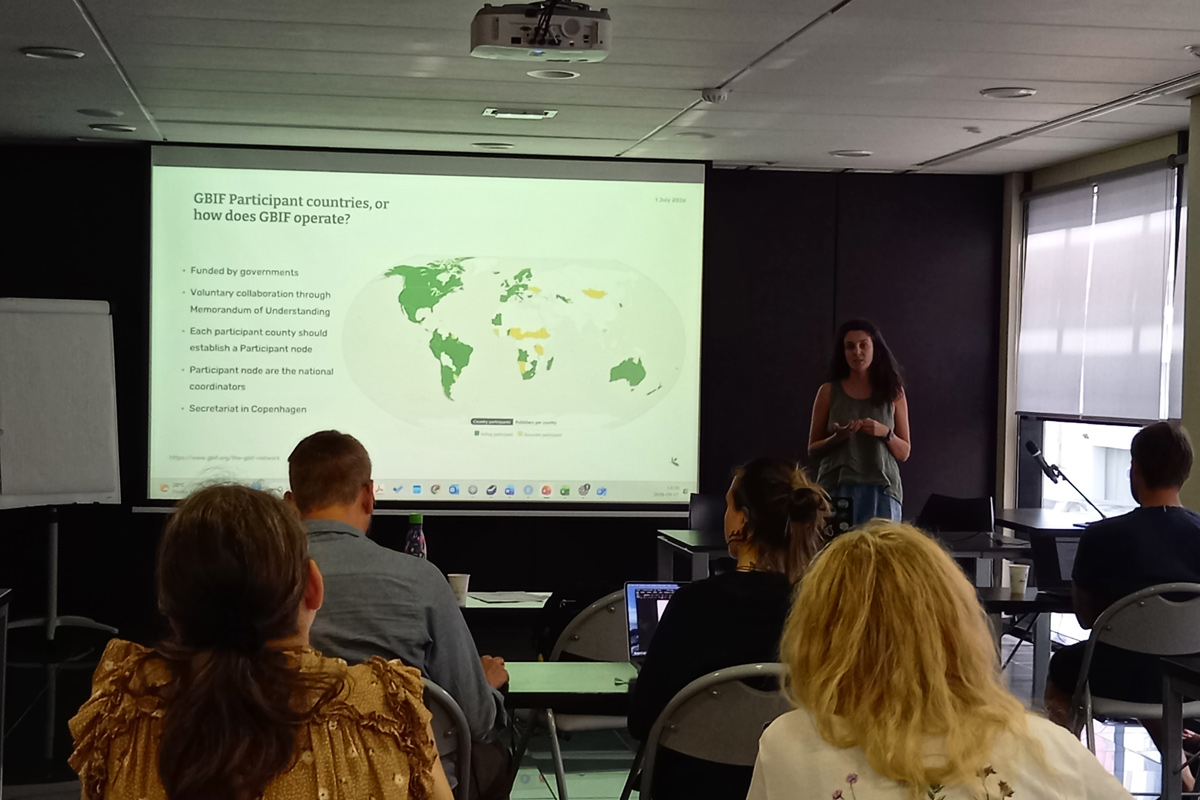
On 7 September 2026, Dr Palpurina was among the instructors in the practical course “Open vegetation data and their handling in R”, together with Irena Axmanová, Jan Divíšek, Martin Večeřa and Milan Chytrý. In her lecture, “Introduction to GBIF and the data publishing process”, she introduced participants to opportunities for publishing data through the Global Biodiversity Information Facility (GBIF). The course combined training in the processing and analysis of vegetation relevés with an introduction to approaches for sharing them through open access.
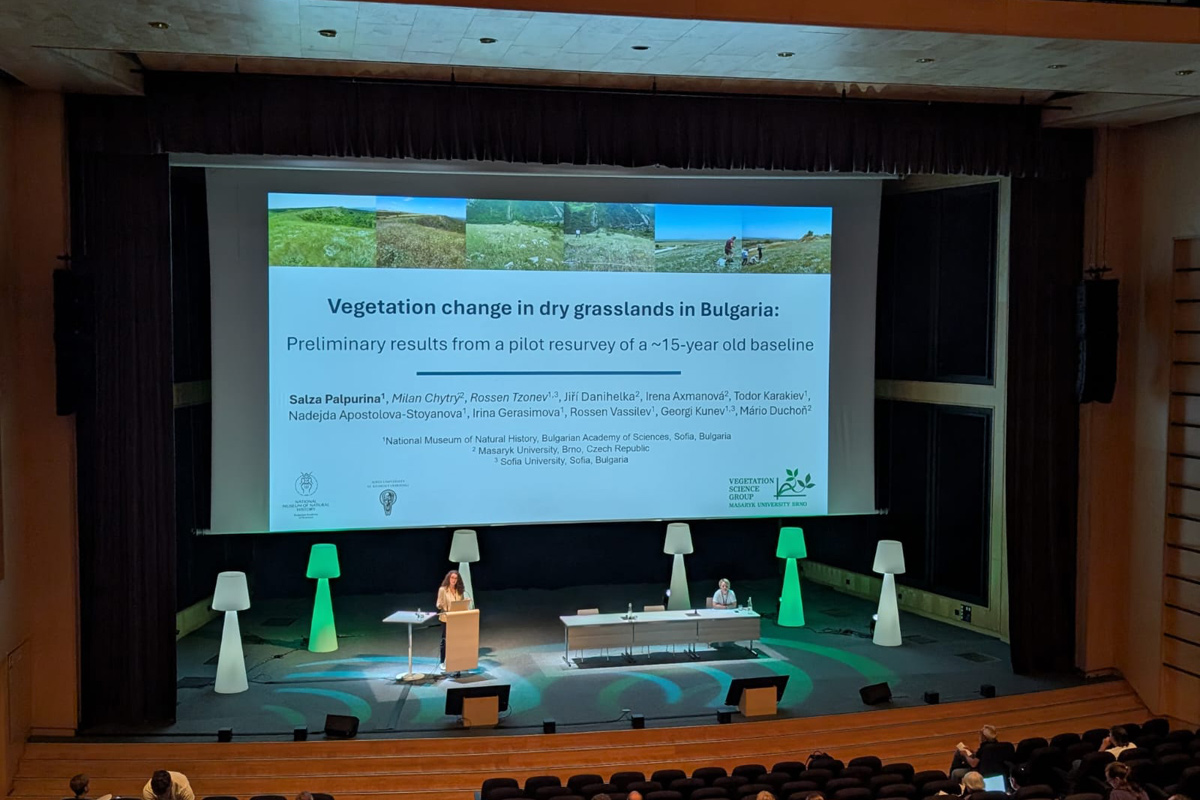
In the scientific programme, Dr Palpurina presented an oral contribution entitled “Vegetation change in dry grasslands in Bulgaria: preliminary results of a 15-year resurvey”. The talk was included in the session on vegetation monitoring and resurveys in the context of global change and biodiversity conservation.
Prof. Rossen Tzonev from the Faculty of Biology at Sofia University also took part in the conference and served on its scientific committee. Prof. Tzonev is a consultant to the National Museum of Natural History at the Bulgarian Academy of Sciences on the CLIMANATRES project. Both researchers took part in the mid-symposium excursion to the glacial Chaudefour Valley. During the conference, Prof. Tzonev presented a contribution on the forest communities of Bosnian pine (Pinus heldreichii) and Macedonian pine (Pinus peuce) in the Pirin Mountains and was among the co-authors of the contribution on the resurvey of Bulgaria’s dry grasslands.
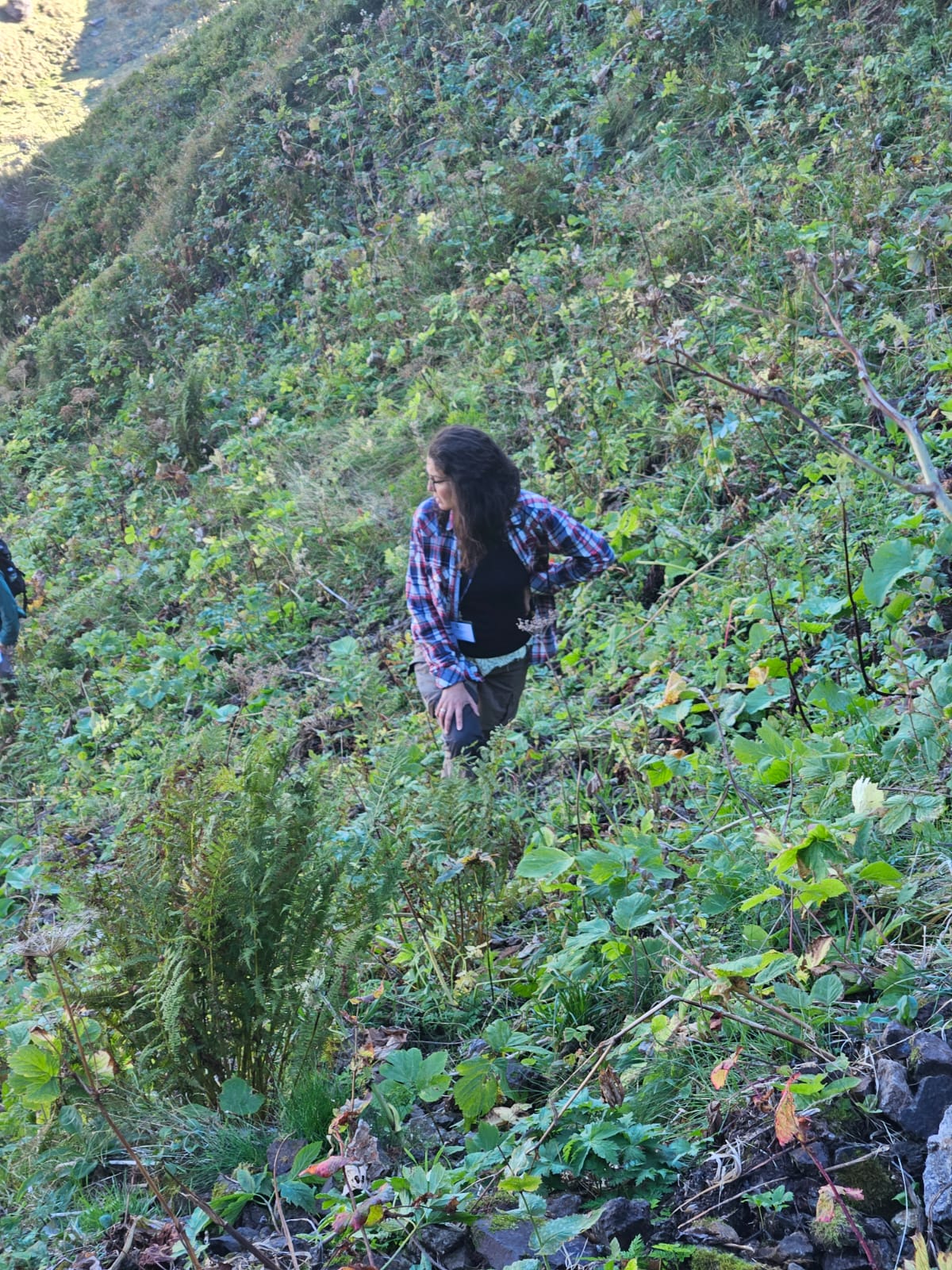
Following the conference, from 11 to 13 September 2026, Dr Palpurina took part in a scientific excursion to the Cantal mountain range. The route followed in Braun-Blanquet’s footsteps to classical localities (loci classici) and sites of his vegetation relevés. The sites visited included classical localities of vegetation alliances described by Braun-Blanquet, including Nardion — mountain grasslands with mat-grass (Nardus stricta), characteristic of acidic soils and sites with long-lasting snow cover — and Adenostylion — tall-herb communities of moist, nutrient-rich mountain habitats. The excursion provided an opportunity to compare them with related high-mountain communities in Bulgaria; Bulgarian Nardus stricta communities are assigned to the Balkan alliance Potentillo ternatae—Nardion strictae.
Josias Braun-Blanquet (1884—1980) was a Swiss botanist and one of the founders of modern phytosociology, the science of plant communities. The approach he developed for classifying vegetation is based on its species composition. Visiting these historic sites connected his scientific legacy with contemporary research on plant diversity and its changes.
Useful links
— European Vegetation Survey
— 34th EVS Conference
— Conference programme
— To the footsteps of Braun-Blanquet
— BIOM 7 (1), 2026 special
— More for Josias Braun-Blanquet
— CLIMANATRES project